FORBIDDEN CITY
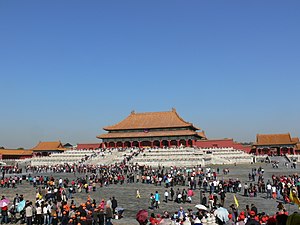
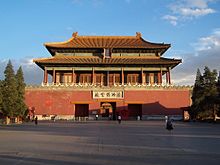 Built in 1406 to 1420, the complex consists of 980 buildings and covers 72 (180 acres). The palace complex exemplifies traditional Chinese palatial architecture, and has influenced cultural and architectural developments in East Asia and elsewhere. The Forbidden City was declared a World Heritage Site in 1987, and is listed by UNESCO as the largest collection of preserved ancient wooden structures in the world.
Since 1925, the Forbidden City has been under the charge of the Palace Museum, whose extensive collection of artwork and artifacts were built upon the imperial collections of the Ming and Quin dynasties. Part of the museum's former collection is now located in the National Palace Museum in Taipei. Both museums descend from the same institution, but were split after the Chinese Civil War.
NAMEThe common English name, "the Forbidden City", is a translation of the Chinese name Zijin Cheng (literally: "Purple Forbidden City"). Another English name of similar origin is "Forbidden Palace.
 HISTORY
By October, the Manchus had achieved supremacy in northern China, and
a ceremony was held at the Forbidden City to proclaim the young Shunzhi Emperor as ruler of all China under the Quin dynasty. The Quin rulers changed the names on some of the principal buildings, to emphasise "Harmony" rather than "Supremacy", made the name plates bilingual (Chinese and Manchu), and introduced Shamanist elements to the palace.
 In 1860, during the Second Opium War, Anglo-French forces took control of the Forbidden City and occupied it until the end of the war. In 1900 Empress Dowager Cixi fled from the Forbidden City during the Boxer Rebellion, leaving it to be occupied by forces of the treaty powers until the following year.
 After being the home of 24 emperors – 14 of the Ming dynasty and 10
of the Qing dynasty – the Forbidden City ceased being the political
centre of China in 1912 with the abdication of Puyi,
the last Emperor of China. Under an agreement with the new Republic of
China government, Puyi remained in the Inner Court, while the Outer
Court was given over to public use, until he was evicted after a coup in 1924. The Palace Museum was then established in the Forbidden City in 1925. In 1933, the Japanese invasion of China forced the evacuation of the national treasures in the Forbidden City.Part of the collection was returned at the end of World War II, but the other part was evacuated to Taiwan in 1948 under orders by Chiang Kai-shek, whose Kuomintang
was losing the Chinese Civil War. This relatively small but high
quality collection was kept in storage until 1965, when it again became
public, as the core of the National Palace Museum in Taipei.
After being the home of 24 emperors – 14 of the Ming dynasty and 10
of the Qing dynasty – the Forbidden City ceased being the political
centre of China in 1912 with the abdication of Puyi,
the last Emperor of China. Under an agreement with the new Republic of
China government, Puyi remained in the Inner Court, while the Outer
Court was given over to public use, until he was evicted after a coup in 1924. The Palace Museum was then established in the Forbidden City in 1925. In 1933, the Japanese invasion of China forced the evacuation of the national treasures in the Forbidden City.Part of the collection was returned at the end of World War II, but the other part was evacuated to Taiwan in 1948 under orders by Chiang Kai-shek, whose Kuomintang
was losing the Chinese Civil War. This relatively small but high
quality collection was kept in storage until 1965, when it again became
public, as the core of the National Palace Museum in Taipei.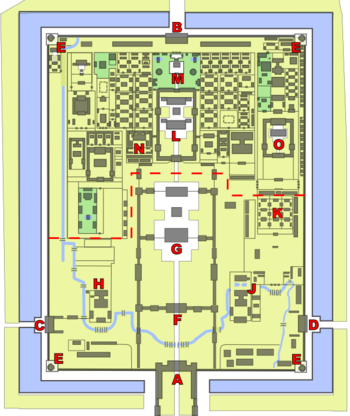

Good
ReplyDeletenyc ;)
ReplyDeleteThankyou! :)
ReplyDelete