 TITANIC
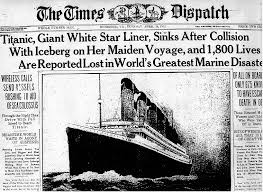
 Titanic was a British passenger liner that sank in the North Atlantic Ocean in the early morning of 15 April 1912 after colliding with an iceberg during her maiden voyage from Southampton, UK to New York, US. The sinking of Titanic caused the deaths of more than 1,500 people in one of the deadliest peacetime maritime adventure in modern history. The Titanic, the largest ship afloat at the time it entered service, was the second of three Olympic class ocean liner operated by the White Star Line, and was built by the Harldand and Wolff shipyard in Belfast with Thomas Andrews as her naval architect. Andrews was among those lost in the sinking.


Under the command of Edward Smith, the ship's passengers included some of the wealthiest people in the world, as well as hundreds of emigrants from Great Britain and Ireland, Scandinavia and elsewhere throughout Europe seeking a new life in North America. A wireless telegraph was provided for the convenience of passengers as well as for operational use. Although Titanic had advanced safety features such as watertight compartments and remotely activated watertight doors, there were not enough lifeboats to accommodate all of those aboard due to outdated maritime safety regulations. Titanic only carried enough lifeboats for 1,178 people—slightly more than half of the number on board, and one-third her total capacity.The disaster was greeted with worldwide shock and outrage at the huge loss of life and the regulatory and operational failures that had led to it. Public inquiries in Britain and the United States led to major improvements in maritime safety. One of their most important legacies was the establishment in 1914 of the International Convention for the Safety of Life at Sea (SOLAS), which still governs maritime safety today.
Commutator magazine
TITANIC
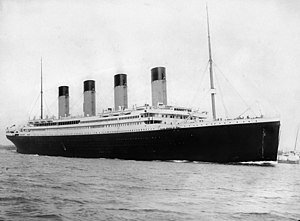 Titanic was a British passenger liner that sank in the North Atlantic Ocean in the early morning of 15 April 1912 after colliding with an iceberg during her maiden voyage from Southampton, UK to New York, US. The sinking of Titanic caused the deaths of more than 1,500 people in one of the deadliest peacetime maritime adventure in modern history. The Titanic, the largest ship afloat at the time it entered service, was the second of three Olympic class ocean liner operated by the White Star Line, and was built by the Harldand and Wolff shipyard in Belfast with Thomas Andrews as her naval architect. Andrews was among those lost in the sinking.
Under the command of Edward Smith, the ship's passengers included some of the wealthiest people in the world, as well as hundreds of emigrants from Great Britain and Ireland, Scandinavia and elsewhere throughout Europe seeking a new life in North America. A wireless telegraph was provided for the convenience of passengers as well as for operational use. Although Titanic had advanced safety features such as watertight compartments and remotely activated watertight doors, there were not enough lifeboats to accommodate all of those aboard due to outdated maritime safety regulations. Titanic only carried enough lifeboats for 1,178 people—slightly more than half of the number on board, and one-third her total capacity.The disaster was greeted with worldwide shock and outrage at the huge loss of life and the regulatory and operational failures that had led to it. Public inquiries in Britain and the United States led to major improvements in maritime safety. One of their most important legacies was the establishment in 1914 of the International Convention for the Safety of Life at Sea (SOLAS), which still governs maritime safety today.
Since its founding in 1963, the Society has regularly distributed a journal to members. Over the years the publication has steadily increased in scope and depth. The Titanic Commutator is now published quarterly as a full-color illustrated magazine reporting on Titanic research and passenger stories, along with other notable ships from the "Golden Age" of transatlantic steamship travel.
At the time of the filming of James Cameron's movie, Titanic, for example, the Commutator provided extensive, behind-the-scenes coverage of set construction and details not shown in the final movie release.
Since its founding in 1963, the Society has regularly distributed a journal to members. Over the years the publication has steadily increased in scope and depth. The Titanic Commutator is now published quarterly as a full-color illustrated magazine reporting on Titanic research and passenger stories, along with other notable ships from the "Golden Age" of transatlantic steamship travel.
At the time of the filming of James Cameron's movie, Titanic, for example, the Commutator provided extensive, behind-the-scenes coverage of set construction and details not shown in the final movie release.


